.png)
Predictive Maintenance and AI: A Manufacturing Primer
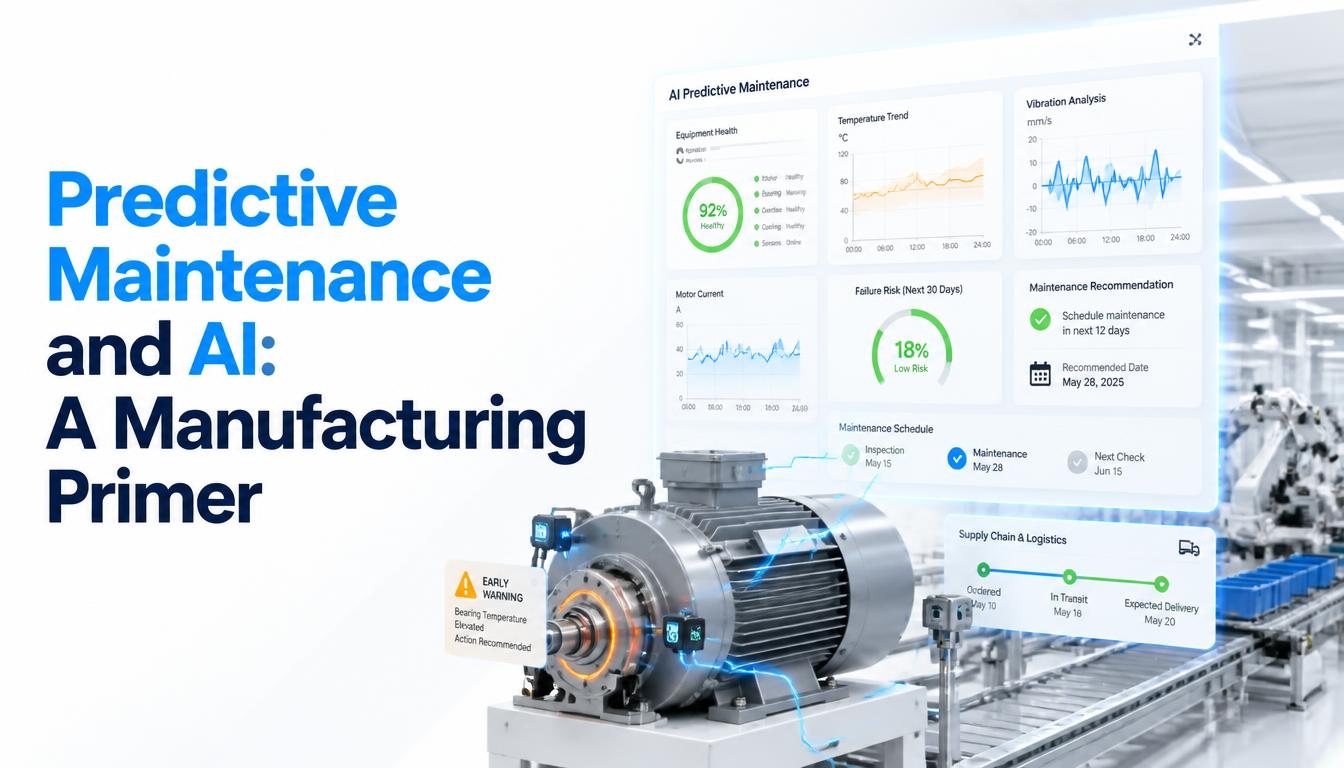
An unplanned line stoppage rarely comes from nowhere. A bearing that is been running hot for two weeks, a motor drawing slightly more current than usual, a supplier shipment that is quietly slipping its date the warning signs are almost always there in the data long before a machine actually goes down or a line runs out of material. The problem is that no maintenance team can watch every sensor reading and every supplier update by hand. That is the gap ai analytics manufacturing closes: models trained to watch those signals continuously and flag the ones that matter, before they turn into downtime.
Why Reactive and Preventive Maintenance Fall Short
Most plants run on one of two older models. Reactive maintenance fixes equipment after it breaks, which means unplanned downtime, rush parts orders, and lost production every time. Preventive maintenance services equipment on a fixed schedule regardless of actual condition, which avoids some failures but wastes labor and parts servicing machines that did not need it yet, while still missing failures that develop faster than the schedule accounts for. Neither approach uses the data the equipment is already generating to make a better informed call.
What AI Analytics Manufacturing Platforms Actually Monitor
At the core of most manufacturing AI platforms is a straightforward loop: collect sensor and production data, compare current readings against patterns that preceded past failures or defects, and surface a risk score when something starts to drift. The specific inputs vary by industry, but three categories show up almost everywhere:
• Equipment condition signals: vibration, temperature, pressure, current draw, and cycle counts
• Production and quality data: defect rates, scrap counts, and cycle time variance by line
• Supply and logistics data: supplier lead times, inventory levels, and shipment tracking
How Predictive Maintenance AI Catches Failures Early
Predictive maintenance ai models are typically trained on historical sensor data paired with past failure records, learning the specific pattern of readings that tends to precede a given failure mode on a given asset type. Once trained, the model scores live sensor data continuously, and when readings start moving toward a known pre failure pattern, it flags the asset for inspection, often weeks ahead of a failure that a fixed maintenance schedule would have missed entirely.
The practical result is a work order that says which asset, what is likely wrong, and roughly how much runway remains, turning maintenance planning from a calendar exercise into a prioritized, evidence based queue.
Comparing Maintenance Strategies
Maintenance Strategy | How It Works | Typical Downtime Impact |
Reactive | Fix equipment after it fails | Highest unplanned stoppages |
Preventive (scheduled) | Service equipment on a fixed calendar regardless of condition | Moderate some over servicing, some missed early failures |
Predictive maintenance AI | Sensor data plus ML models flag failure risk before it happens | Lowest service timed to actual equipment condition |
Most manufacturers do not replace preventive maintenance outright, they layer predictive maintenance ai on top of their highest cost or most failure prone equipment first, keeping scheduled servicing for lower risk assets where the return on a full predictive model is smaller.
Extending the Same Approach with Supply Chain Intelligence
The same forecasting logic that predicts equipment failure applies just as well upstream of the production line. Supply chain intelligence uses AI models on supplier performance history, shipment tracking, and inventory levels to flag a likely material shortage or delivery delay before it forces a line to slow down. Paired with predictive maintenance, this gives plant managers visibility into both the equipment risk and the material risk driving next month is output, the two most common causes of unplanned downtime, addressed by the same underlying discipline.
Getting Started Without a Full Plant Overhaul
1. Start With Your Costliest Failure Mode
Pick the single piece of equipment or line where unplanned downtime is most expensive, and build the first model there rather than attempting a facility wide rollout on day one.
2. Use the Sensor Data You Already Have
Most plants already generate usable data through existing PLCs and SCADA systems. Start with that data before investing in new sensor hardware, and let the model is blind spots guide where new sensors actually get added.
3. Route Alerts Into the Existing Maintenance Workflow
A risk score is only useful if it turns into a work order the maintenance team actually sees. Connect model alerts to the CMMS or ticketing system already in use rather than adding a separate dashboard nobody checks.
Frequently Asked Questions
What is AI analytics manufacturing, in plain terms?
It is the use of machine learning models on plant data, sensor readings, production logs, quality inspections, and supply chain records to predict outcomes like equipment failure, quality defects, or material shortages before they happen, rather than just reporting on them after the fact.
How does predictive maintenance AI actually detect a failure before it happens?
Vibration, temperature, and pressure sensors on equipment feed a model trained on historical failure patterns. When current readings start drifting toward the signatures that preceded past failures, the model flags the asset for inspection, often weeks before a human would notice a change.
Do we need new sensors to get started, or can we use existing equipment data?
Many plants already generate more usable data than they realize through existing PLCs, SCADA systems, and quality logs. Most predictive maintenance programs start by mining that existing data before adding new sensors, only expanding sensor coverage once the model shows where the gaps are.
How is supply chain intelligence related to predictive maintenance?
Both draw on the same underlying approach, using AI to predict a disruption before it hits the production line. Supply chain intelligence extends the same forecasting logic upstream, flagging supplier delays or material shortages early enough for procurement to adjust before a line actually runs short.
What kind of downtime reduction is realistic?
Results vary by industry and starting maturity, but manufacturers commonly report 20 to 50 percent reductions in unplanned downtime after a predictive maintenance program matures, alongside fewer emergency parts orders and less overservicing of healthy equipment.
Is this only for large manufacturers with big budgets?
No, many platforms now offer modular, per asset pricing, so a mid size plant can start with its most failureprone or highest cost equipment line and expand coverage as the program proves out, rather than committing to a full facility rollout on day one.
Conclusion: Let the Data Flag Problems Before They Start
Downtime and shortages rarely happen without warning the signals are usually sitting in sensor logs, quality records, and supplier data well before anyone notices a problem. Predictive maintenance ai turns those equipment signals into an early warning system, and supply chain intelligence does the same further upstream. Together, they are what ai analytics manufacturing teams are increasingly relying on to move from reacting to downtime toward preventing it.
Ready to see where your own equipment or supply data already points to risk? Start with one high cost asset and run the numbers this month.